The Karanam System: From Village Power to NTR’s 1984 Abolition
A History of Village Revenue Administration in Andhra Pradesh & Telangana
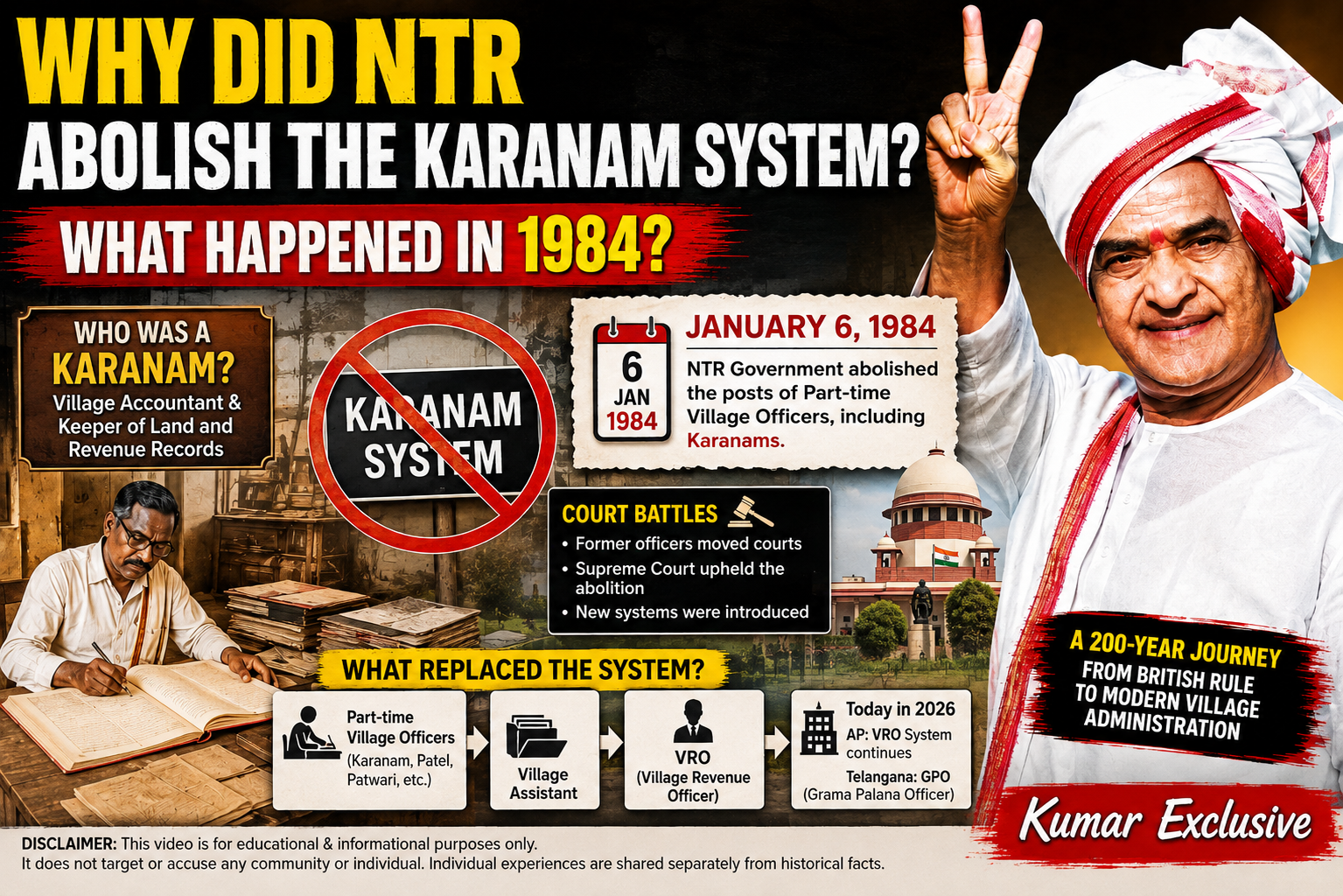
A Karanam was traditionally a village accountant and revenue-record officer in the Andhra region, responsible for important land and revenue records
What Was the KARANAM System? Why Did NTR Abolish It? 🇮🇳
For my non-Telugu viewers:
A Karanam was traditionally a village accountant/revenue record officer in the Andhra region. Karanams maintained important village records involving land, survey details, cultivation and revenue.
The system had roots before British rule, but the British formally regulated Karnams as early as 1802.
Over time, the system changed from hereditary village offices to government-regulated village administration.
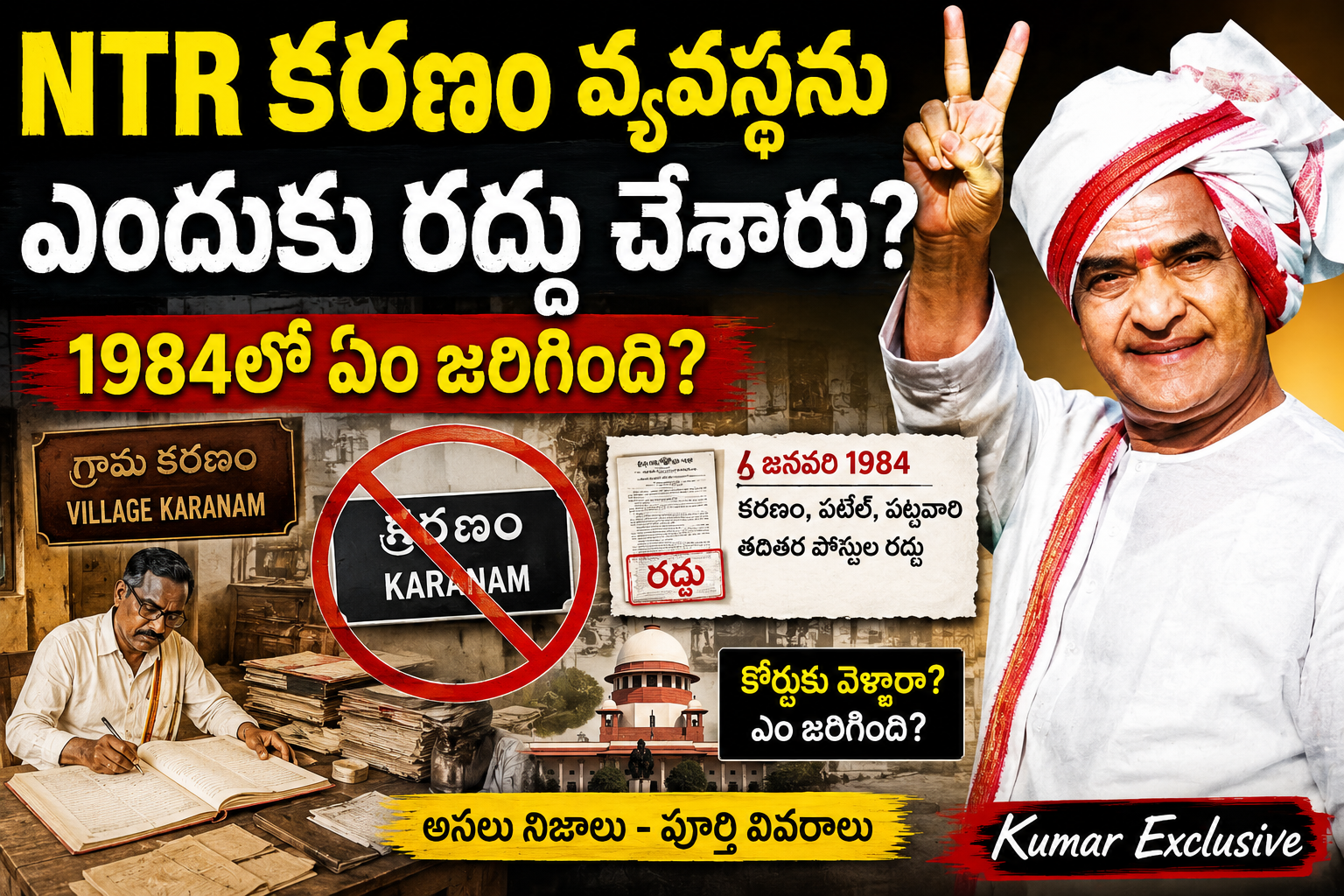
The biggest turning point came on January 6, 1984, when the N.T. Rama Rao government abolished the old Part-time Village Officer posts, including Karanams.
Former Village Officers challenged the changes in court, with litigation reaching the Supreme Court. The old posts were not restored. New systems such as Village Assistants and later VROs followed.
In this Telugu video, I explain:
• The history of the Karanam system
• Why Karanams had significant influence in villages
• Experiences shared by some affected village families
• Why NTR abolished the old system
• The Supreme Court and later court battles
• What replaced Karanams
• What AP & Telangana use today
Important: The video does NOT claim that every Karanam was corrupt or abused his position. Individual experiences and allegations are presented separately from documented historical facts.
🎥 Karanam System: From British-Era Regulation to NTR’s 1984 Abolition | Kumar Exclusive
కరణం వ్యవస్థ అసలు కథ: బాధితుల అనుభవాలు నుంచి NTR రద్దు వరకు | Kumar Exclusive
DISCLAIMER:
ఈ వీడియోలో చెప్పబడిన కొన్ని సంఘటనలు సంబంధిత వ్యక్తులు/కుటుంబాలు Kumar Exclusiveతో పంచుకున్న వ్యక్తిగత అనుభవాలు మరియు ఆరోపణలు. స్వతంత్రంగా నిర్ధారించని ఆరోపణలను established factsగా చూపించడం లేదు. కరణంగా పనిచేసిన ప్రతి వ్యక్తిపై అవినీతి లేదా అక్రమాల ఆరోపణ చేయడం ఈ వీడియో ఉద్దేశం కాదు. ఈ వీడియో చారిత్రక village-administration system మరియు దాని సామాజిక ప్రభావంపై educational discussion మాత్రమే.
కరణం వ్యవస్థ పూర్తి చరిత్ర
బ్రిటిష్ కాలం నుంచి NTR వరకు — ఇప్పుడు ఏముంది?
నమస్కారం! Kumar Exclusive కు స్వాగతం.
ఈరోజు మనం ఆంధ్రప్రదేశ్, తెలంగాణ గ్రామ పరిపాలన చరిత్రలో చాలా ఆసక్తికరమైన అంశం గురించి మాట్లాడుకుందాం.
కరణం అంటే ఎవరు?
కరణం వ్యవస్థ ఎప్పుడు మొదలైంది?
బ్రిటిష్ వాళ్లు కరణం వ్యవస్థను తీసుకొచ్చారా?
కరణం చేతిలో ఎంత అధికారం ఉండేది?
ఎన్టీ రామారావు గారు అధికారంలోకి వచ్చిన తర్వాత కరణం వ్యవస్థను ఎందుకు రద్దు చేశారు?
కరణాలు కోర్టుకు వెళ్లారా?
Supreme Court ఏం చెప్పింది?
ఆ తర్వాత Village Assistant, VRO వ్యవస్థలు ఎలా వచ్చాయి?
మరి 2026లో ఆంధ్రప్రదేశ్, తెలంగాణలో ఇప్పుడు గ్రామ Revenue Administration ఎలా ఉంది?
మొత్తం చరిత్రను ఒక timeline లాగా చూద్దాం.
1. కరణం అంటే ఎవరు?
కరణం — Karnam/Karanam — అంటే ప్రధానంగా గ్రామ Accountant లేదా Village Revenue Record Keeper.
పాత రోజుల్లో గ్రామంలో ఎవరి భూమి ఎంత?
Survey numbers ఏమిటి?
ఎవరు భూమిని సాగు చేస్తున్నారు?
పన్నులు ఎంత?
గ్రామానికి సంబంధించిన revenue accounts ఏమిటి?
ఇలాంటి విషయాలకు సంబంధించిన records నిర్వహించడంలో కరణానికి ముఖ్యమైన పాత్ర ఉండేది.
అంటే ఈరోజు మనం కంప్యూటర్లో లేదా online land recordsలో చూసే సమాచారంలో చాలా భాగం అప్పట్లో physical registersలో ఉండేది.
ఆ రికార్డులను నిర్వహించే గ్రామస్థాయి అధికారుల్లో కరణం ముఖ్యమైన వ్యక్తి.
2. కరణం వ్యవస్థను బ్రిటిష్ వాళ్లు మొదలుపెట్టారా?
ఇక్కడ ఒక ముఖ్యమైన correction ఉంది.
“British వాళ్లు Karanam system create చేశారు” అని చెప్పడం పూర్తిగా సరైనది కాదు.
కరణం లేదా గ్రామ accountant లాంటి వ్యవస్థలు బ్రిటిష్ పాలనకు ముందే దక్షిణ భారతదేశంలో ఉన్నాయి.
బ్రిటిష్ ప్రభుత్వం చేసిన ముఖ్యమైన పని ఏమిటంటే—
అప్పటికే ఉన్న ఈ village officesను తమ Revenue Administrationలోకి తీసుకొని చట్టబద్ధంగా regulate చేయడం.
3. 1802 — చాలా ముఖ్యమైన సంవత్సరం
1802లో Madras Karnams Regulation — Regulation XXIX of 1802 వచ్చింది.
అంటే 200 సంవత్సరాల కంటే ముందే “Karnam” అనే officeపై ప్రత్యేక regulation ఉండేది.
అప్పటి Madras Presidencyలో నేటి ఆంధ్ర ప్రాంతంలోని చాలా భాగాలు ఉండేవి.
అందుకే మన Andhra village administration మీద Madras Presidency lawsకు చాలా ప్రభావం ఉంది.
తర్వాత ఆంధ్రప్రదేశ్ ప్రభుత్వం 1969లో పాత laws repeal చేసినప్పుడు కూడా Karnams Regulation, 1802ను ప్రత్యేకంగా repeal చేసిన lawsలో పేర్కొంది.
అందువల్ల వీడియోలో:
“కరణం వ్యవస్థ 1802లో మొదలైంది”
అని కాకుండా,
“కరణం వ్యవస్థ అంతకంటే పాతది; కానీ 1802 నాటికే British Madras administration కరణాలపై ప్రత్యేక Regulation తీసుకొచ్చింది”
అని చెప్పడం accurate.
4. 1894–1895: Hereditary Village Officers
19వ శతాబ్దం చివరికి village administrationను మరింత formally regulate చేశారు.
Madras Proprietary Estates’ Village Service Act, 1894
మరియు
Madras Hereditary Village Offices Act, 1895
వంటి laws వచ్చాయి.
ఈ వ్యవస్థలో కొన్ని village offices hereditary — వారసత్వంగా వచ్చే ఉద్యోగాలుగా ఉండేవి.
అంటే ఒక కుటుంబం తరతరాలుగా అదే village officeతో సంబంధం కలిగి ఉండే పరిస్థితులు ఉండేవి.
Village Munsif, Karanam, Patel, Monigar వంటి పేర్లు ప్రాంతాన్ని బట్టి కనిపించేవి.
5. కరణానికి గ్రామంలో ఎందుకు అంత influence ఉండేది?
ఇది అర్థం చేసుకోవడం చాలా ముఖ్యం.
ఆ రోజుల్లో:
Internet లేదు.
Digital land records లేవు.
Online registration లేదు.
MeeSeva లేదు.
Computerized survey maps లేవు.
ఒక రైతు భూమికి సంబంధించిన సమాచారం తెలుసుకోవాలంటే గ్రామ records చాలా ముఖ్యమైనవి.
అవి ఎవరి దగ్గర ఉంటాయి?
Village Revenue machinery దగ్గర.
అందులో Karanam ఒక కీలక వ్యక్తి.
అందువల్ల information itself was power.
గ్రామంలో ఎవరి భూమి ఎంత, recordsలో ఏముంది, revenue entries ఏమిటి వంటి విషయాలపై కరణానికి considerable knowledge ఉండేది.
దీనివల్ల కొన్ని ప్రాంతాల్లో కరణాలు చాలా influential figuresగా మారారనే సామాజిక అభిప్రాయం ఏర్పడింది.
కానీ ఇక్కడ నేను ఒక విషయం స్పష్టంగా చెబుతున్నాను:
“అందరు కరణాలు corrupt” లేదా “అందరు cunning” అని generalize చేయడం చారిత్రకంగా సరైంది కాదు.
వ్యవస్థపై criticism ఒకటి; ప్రతి individual officer character మరో విషయం.
6. Independence వచ్చిన తర్వాత కూడా వ్యవస్థ కొనసాగిందా?
అవును.
1947లో British rule ముగిసిన వెంటనే village administration మొత్తం ఒక్కరోజులో disappear కాలేదు.
పాత administrative structuresలో చాలా భాగం కొనసాగింది.
1953లో Andhra State వచ్చింది.
1956లో Andhra Pradesh ఏర్పడింది.
కానీ village-level revenue administration అవసరం మాత్రం అలాగే ఉంది.
7. Hereditary system మీద పెద్ద మార్పు
స్వతంత్ర భారతదేశంలో ఒక government job లేదా public office ఒక కుటుంబానికి hereditaryగా రావడం constitutional equality principlesతో conflict అయ్యే సమస్య వచ్చింది.
1960లో Supreme Court hereditary basisలో appointmentకు సంబంధించిన provisionను Article 16 నేపథ్యంలో unconstitutionalగా చూసింది.
అందువల్ల ఒక distinction గుర్తుంచుకోవాలి:
Hereditary character పోవడం ఒక విషయం.
Karanam/Village Officer post itself పూర్తిగా abolish చేయడం మరో విషయం.
ఈ రెండూ ఒకే సమయంలో జరగలేదు.
8. 1961 నుంచే Village Officer systemపై questions
NTR 1984లో వచ్చి ఒక్కసారిగా ఈ సమస్యను కనిపెట్టలేదు.
1961లోనే Andhra Pradesh ప్రభుత్వం K.M. Unnithan Committeeను ఏర్పాటు చేసింది.
ప్రస్తుత part-time village officer system efficient public administrationకు సరిపోతుందా అనే అంశాన్ని పరిశీలించారు.
Committee assessmentలో ముఖ్యమైన విషయం:
Part-time village officers చాలా ఎక్కువగా ఉన్నారు; administrationను reorganize చేసి fewer, full-time officials వైపు వెళ్లాలి.
అంటే NTR నిర్ణయానికి రెండు దశాబ్దాల ముందే reform గురించి government levelలో discussion జరిగింది.
9. 1969లో మరో కీలక మార్పు
Andhra Pradeshలో పాత hereditary village-office lawsను repeal చేశారు.
1969 legislation ద్వారా 1802 Karnams Regulation సహా పాత laws repeal అయ్యాయి.
Andhra Area Village Offices Service Rules, 1969 వంటి కొత్త framework వచ్చింది.
అంటే 1984 వచ్చేసరికి:
పాత British hereditary Karanam system exactly అదే రూపంలో లేదు.
కానీ Karanam సహా part-time village officers system మాత్రం కొనసాగుతోంది.
ఈ distinction వీడియోలో తప్పకుండా చెప్పాలి.
10. NTR అధికారంలోకి వచ్చారు
1983లో N.T. Rama Rao గారు Andhra Pradesh Chief Minister అయ్యారు.
అదే సమయంలో village administrationను reorganize చేయడం గురించి మళ్లీ serious examination జరిగింది.
1983లో Guntur Collector I. Narasimha Rao ఆధ్వర్యంలో village establishmentపై study జరిగినట్లు subsequent court recordsలో కనిపిస్తుంది.
Government ముందు ఉన్న basic question:
ఇంత పాత part-time village officer structureను continue చేయాలా? లేక modern full-time village administration తీసుకురావాలా?
11. NTR ఎందుకు కరణం వ్యవస్థను రద్దు చేశారు?
ఇక్కడ social story ఒకటి, official reason మరోటి.
గ్రామాల్లో కరణాలు చాలా powerfulగా ఉండేవారు, records వాళ్ల చేతిలో ఉండేవి, favoritism లేదా misuse జరిగేదనే complaints/criticisms ఉన్నాయని ప్రజల narrativesలో వినిపిస్తుంది.
కానీ వీడియోలో నేను అదే official reason అని చెప్పను.
Government/legal justification చాలా స్పష్టంగా ఉంది.
పాత Part-time Village Officer system “outmoded” అయిందని, modern administrative needsకు సరిపోవడం లేదని ప్రభుత్వం భావించింది.
Government objective:
పాత part-time structureను తొలగించి, efficient full-time village administration ఏర్పాటు చేయడం.
అందుకే NTR నిర్ణయాన్ని కేవలం:
“కరణాలు cunning కాబట్టి తీసేశారు”
అని చెప్పడం చరిత్రను oversimplify చేయడం అవుతుంది.
12. THE BIG DATE — 6 JANUARY 1984
ఈ date మీకు గుర్తుండాలి:
6 January 1984
NTR government’s recommendationపై Governor:
Andhra Pradesh Abolition of Posts of Part-time Village Officers Ordinance No.1 of 1984
promulgate చేశారు.
దీంతో Karanamతో పాటు covered Part-time Village Officer posts abolish అయ్యాయి.
అంటే technically:
NTR ఒక్కొక్క Karanamను “fire” చేయలేదు.
Government ఆ postsనే abolish చేసింది.
ఈ wording చాలా important.
13. ఏ posts ప్రభావితమయ్యాయి?
ప్రాంతాన్ని బట్టి పేర్లు మారేవి.
Karanam,
Munsiff,
Patel,
Patwari,
Reddy,
Monigar,
Peddakapu
వంటి categories part-time village-officer structureలో కనిపించేవి.
అందుకే ఇది కేవలం Karanam community/job మీద ఒక isolated action కాదు.
ఇది broader Part-time Village Officers system abolition.
14. కరణాలు ఊరుకున్నారా? — లేదు, Courtకు వెళ్లారు
ఈ నిర్ణయం వల్ల ఉద్యోగాలు పోయిన Village Officers courtsను ఆశ్రయించారు.
ఈ litigationలో అత్యంత ముఖ్యమైన case:
T. Venkata Reddy and Others v. State of Andhra Pradesh
Case Supreme Court of India వరకు వెళ్లింది.
Former Village Officers essentially abolition legalityని challenge చేశారు.
15. Supreme Court ఏమంది?
27 March 1985లో Supreme Court కీలక judgment ఇచ్చింది.
Court abolitionను reverse చేసి:
“అందరికీ Karanam jobs తిరిగి ఇవ్వండి”
అని చెప్పలేదు.
Abolition నిలిచింది.
అంటే 6 January 1984న abolished అయిన పాత posts తిరిగి revive కాలేదు.
ఇది NTR government’s policyకి చాలా ముఖ్యమైన legal victory.
16. 1985లో Legislature ఏమి చేసింది?
తర్వాత:
Andhra Pradesh Abolition of Posts of Part-time Village Officers Act, 1985
వచ్చింది.
దీనివల్ల abolitionకు statutory legislative framework వచ్చింది.
Act retrospectively 6 January 1984 నుంచి effect ఇచ్చింది.
17. మరి గ్రామంలో ఆ పనులు ఎవరు చేస్తారు?
Karanam post తీసేస్తే land/revenue administration అవసరం పోదు కదా?
అందుకే కొత్త village administration structure అవసరమైంది.
Government Village Assistant posts create చేసింది.
1985లో 4,800 Village Assistant posts sanction అయ్యాయి.
ఇక్కడ మరో పెద్ద controversy మొదలైంది.
18. పాత Karanams/Village Officers ఏమన్నారు?
వారి argument:
“మా jobs abolish చేశారు. ఇప్పుడు అదే village administration కోసం కొత్త Village Assistant posts పెడుతున్నారు. Qualifications ఉన్న మాకు preference ఇవ్వాలి.”
దీనిపై మళ్లీ litigation జరిగింది.
Courts qualified former Part-time Village Officersను కొత్త recruitmentలో ఎలా consider చేయాలనే అంశాన్ని పరిశీలించాయి.
19. 1987 Supreme Court directions
Litigation Supreme Court వరకు వెళ్లింది.
Qualified former Village Officersకు age-related relaxation/consideration వంటి protectionsతో కొత్త Village Assistant recruitmentలో opportunity ఇవ్వాలని directions వచ్చాయి.
అంటే:
Old Karanam post restore కాలేదు.
కానీ:
Eligible former officersను కొత్త systemలో completely ignore చేయకూడదు
అనే issue వచ్చింది.
ఇది చాలా ముఖ్యమైన difference.
20. 1988 — NTR మీద Contempt Case
ఇప్పుడు మీరు అడిగిన మరో famous case వస్తుంది:
Andhra Provincial Village Officers Association v. N.T. Rama Rao & Others — 1 July 1988
Former Village Officers Associations ఏమన్నాయి?
Government courts ఇచ్చిన directionsను properly implement చేయలేదని ఆరోపించాయి.
NTR, Revenue officialsపై Contempt of Court proceedings కోరారు.
21. 7,100 మంది vs 4,800 jobs controversy
Petitioners side నుంచి:
సుమారు 7,100 qualified former Village Officers ఉన్నారని,
Government మాత్రం 4,800 Village Assistant posts మాత్రమే create చేసిందని argument వచ్చింది.
వారి interpretation:
Qualified former officers అందరికీ accommodation ఉండాలి.
Government argument:
“Administrative requirement 4,800 posts మాత్రమే. Court మాకు ప్రతి eligible former officer కోసం కొత్త post create చేయమని చెప్పలేదు.”
22. 1988లో Court ఏమంది?
Andhra Pradesh High Court government’s positionను broadly accepted చేసింది.
Court directionsను wilfully violate చేశారని establish కాలేదని తేల్చింది.
Contempt petitions dismissed అయ్యాయి.
అంటే:
NTRని contemptలో punish చేయలేదు.
Governmentకు 7,100 మంది కోసం తప్పనిసరిగా additional jobs create చేయాలి అని కూడా Court చెప్పలేదు.
23. ఇక్కడ NTR chapterను ఎలా summarize చేయాలి?
ఒక lineలో:
“NTR కరణాలను వ్యక్తిగతంగా తొలగించలేదు; శతాబ్దాలుగా మారుతూ వచ్చిన part-time village officer administrative structureనే 1984లో abolish చేశారు.”
అదే historically safer statement.
24. తర్వాత Village Revenue Officer — VRO ఎలా వచ్చింది?
కాలక్రమేణా village revenue administration మళ్లీ restructure అయ్యింది.
Village Assistant/Village Administrative Officer వంటి arrangements తర్వాత Village Revenue Officer — VRO అనే structure ఏర్పడింది.
Andhra Pradeshలో Village Revenue Officers Service Rules, 2008 framework వచ్చింది.
అంటే ఒక interesting cycle చూడండి:
Karanam → Part-time Village Officer abolition → Village Assistant/new village administration → VRO.
Technology వచ్చినా village-level revenue function మాత్రం disappear కాలేదు.
25. 2014లో Andhra Pradesh విడిపోయింది
2014లో united Andhra Pradesh రెండు రాష్ట్రాలైంది:
Andhra Pradesh
మరియు
Telangana.
అక్కడినుంచి రెండు states village revenue administrationలో వేర్వేరు directionsలో వెళ్లాయి.
26. Telanganaలో 2020లో మళ్లీ పెద్ద సంచలనం
Telangana ప్రభుత్వం:
Telangana Abolition of the Posts of Village Revenue Officers Act, 2020
తీసుకొచ్చింది.
దీంతో Telanganaలో VRO posts abolish అయ్యాయి.
ఒక historical irony చూడండి:
1984లో NTR పాత Part-time Village Officer posts abolish చేశారు.
దశాబ్దాల తర్వాత Telanganaలో VRO post itself 2020లో abolish అయింది.
VRO employeesను ఇతర government departmentsలో absorb/redeploy చేసే provision పెట్టారు.
27. Telanganaలో మళ్లీ village-level officer ఎందుకు?
VRO system abolish చేసిన తర్వాత village levelలో direct revenue presence తగ్గిందనే concerns వచ్చాయి.
Land-related problems, farmersకు local assistance వంటి issues నేపథ్యంలో Telangana మళ్లీ village-level revenue machineryను strengthen చేయాలని నిర్ణయించింది.
2025లో Telangana Government 10,954 Village Level Officer posts creationకు sanction ఇచ్చింది.
వాటికి పేరు:
Grama Palana Officer — GPO
Ex-VROs/VRAs నుంచి options తీసుకొని appointments చేయడానికి framework తీసుకొచ్చారు.
2025 Septemberలో 5,106 GPOs selected అయ్యారని reported అయింది మరియు appointment letters ఇచ్చారు.
అంటే Telanganaలో ఇప్పుడు కథ:
Karanam → VRO → VRO abolition → Grama Palana Officer (GPO).
28. మరి Andhra Pradeshలో 2026 పరిస్థితి ఏమిటి?
ఇక్కడ Telanganaతో confuse చేయకూడదు.
Andhra Pradeshలో VRO framework కొనసాగుతోంది.
దానికి చాలా తాజా evidence కూడా ఉంది.
4 August 2026న Andhra Pradesh ప్రభుత్వం AP Village Revenue Officers Service Rules, 2008కు amendment notification జారీ చేసింది.
అంటే 2026లో APలో VRO service framework ఇంకా activeగా ఉందని స్పష్టంగా తెలుస్తోంది.
Village revenue administration ఇప్పుడు Tahsildar/Mandal Revenue machinery, VRO-level functions, digital land records, survey/registration systems మొదలైన modern structuresతో పనిచేస్తోంది.
అందువల్ల AP మరియు Telangana ఇప్పుడు ఒకే systemలో లేవు.
29. 200 సంవత్సరాల్లో జరిగిన మార్పును చూడండి
ఈ history చాలా fascinating.
Pre-British period:
Traditional village accountant/Karanam.
1802:
Madras Karnams Regulation.
1894–1895:
Village service/hereditary village-office laws.
1947:
Independence.
1960s:
Hereditary principleపై constitutional change; village administration reform studies.
1969:
Old hereditary laws/Karnams Regulation repeal; new service framework.
6 January 1984:
NTR government abolishes Part-time Village Officer posts.
1985:
Supreme Court litigation; abolition survives. Legislative Act follows.
1985 onward:
4,800 Village Assistant posts and disputes over absorption.
1987–1988:
Further Supreme Court directions and contempt litigation.
Later:
Village Revenue Officer system develops.
2014:
AP–Telangana bifurcation.
2020 Telangana:
VRO posts abolished.
2025 Telangana:
10,954 Grama Palana Officer posts sanctioned.
2026:
Telangana has moved toward the GPO model, while Andhra Pradesh continues under its VRO service framework.
30. అసలు lesson ఏమిటి?
నా దృష్టిలో ఈ కథలో interesting point:
పేరు మారింది — కానీ గ్రామానికి Revenue Administration అవసరం మాత్రం పోలేదు.
ఒకప్పుడు:
కరణం.
తర్వాత:
Village Officer.
తర్వాత:
Village Assistant.
తర్వాత:
VRO.
Telanganaలో ఇప్పుడు:
GPO — Grama Palana Officer.
Technology వచ్చింది.
Land records digital అయ్యాయి.
Administrative hierarchy మారింది.
కానీ రైతు భూమి, survey, mutation, revenue records, government certificates వంటి విషయాలకు village-level administration అవసరం ఇప్పటికీ ఉంది.
31. NTR decision మంచిదా? చెడ్డదా?
దీనిని black-and-whiteగా చూడకుండా రెండు sides చెప్పాలి.
NTR government’s argument:
పాత part-time system outdated.
Modern administration అవసరం.
Hereditary/local concentration of influence నుంచి professional administration వైపు వెళ్లాలి.
Critics/affected employees side:
ఒక్కసారిగా posts abolish చేయడంతో వేల మంది livelihoods ప్రభావితమయ్యాయి.
అందుకే litigation జరిగింది.
తర్వాత government కొత్త Village Assistant posts create చేయడం వల్ల:
“మమ్మల్ని తీసేసి మళ్లీ అదే పని చేయడానికి కొత్త posts ఎందుకు?”
అనే ప్రశ్న former officers నుంచి రావడం సహజం.
అందుకే ఈ issue Supreme Court వరకు వెళ్లింది.
32. వీడియో ముగింపు
ఒకప్పుడు గ్రామంలో కరణం అంటే చాలా influential position.
Land records నుంచి revenue accounts వరకు గ్రామ administrationలో కీలక పాత్ర.
కానీ ఈ system ఒక్కరోజులో పుట్టలేదు.
ఒక్కరోజులో మారలేదు.
Pre-British roots నుంచి British regulation వచ్చింది.
Independent Indiaలో hereditary character తొలగింది.
Reform committees వచ్చాయి.
చివరకు 1984 January 6న NTR ప్రభుత్వం old Part-time Village Officer posts abolish చేసింది.
Karanams/Village Officers courtsకు వెళ్లారు.
Supreme Court వరకు litigation జరిగింది.
Old posts మాత్రం తిరిగి రాలేదు.
కానీ village revenue administration అవసరం ఉండటంతో కొత్త systems వచ్చాయి.
ఇప్పుడు 2026లో:
Andhra Pradeshలో VRO framework కొనసాగుతోంది.
Telanganaలో VRO abolition తర్వాత Grama Palana Officer — GPO system తీసుకొచ్చారు.
అంటే రెండు వందల సంవత్సరాల తర్వాత కూడా ఒక విషయం మారలేదు:
గ్రామానికి భూమి మరియు Revenue records చూసే local administrative machinery అవసరం.
పేరు మాత్రమే కాలంతో మారుతూ వచ్చింది.
కరణం నుంచి VRO వరకు… VRO నుంచి GPO వరకు… ఇదే మన Village Revenue Administration చరిత్ర.
మీ ఊరిలో పాత కరణం వ్యవస్థ గురించి మీకు గుర్తున్న విషయాలు ఏమైనా ఉన్నాయా?
మీ తాతలు, తండ్రులు కరణం దగ్గరకు land records కోసం వెళ్లిన అనుభవాలు చెప్పారా?
కరణం వ్యవస్థ మంచిదా?
NTR దాన్ని abolish చేయడం సరైన నిర్ణయమా?
మీ అనుభవాన్ని commentsలో గౌరవప్రదంగా పంచుకోండి.
— Kumar Exclusive
Disclaimer: ఈ వీడియో చారిత్రక, న్యాయ మరియు సామాజిక సమాచారాన్ని వివరించడానికి మాత్రమే. ఒక particular community, caste లేదా former village officers అందరినీ corrupt/cunningగా చిత్రీకరించడం ఉద్దేశం కాదు. Historical administrative systemపై వచ్చిన criticismను individual personsపై allegationగా తీసుకోకూడదు.
#Telugu vid part 1 KARANAM కరణం వ్యవస్థ అసలు కథ: బాధితుల అనుభవాలు నుంచి NTR రద్దు వరకు | KE
https://youtu.be/ovCSrkWkoW0
#Telugu vid part 2 KARANAM కరణం వ్యవస్థ అసలు కథ: బాధితుల అనుభవాలు నుంచి NTR రద్దు వరకు | KE
https://youtu.be/yQ9O6zdRJlU
#Telugu vid part 3 KARANAM కరణం వ్యవస్థ అసలు కథ: బాధితుల అనుభవాలు నుంచి NTR రద్దు వరకు | KE
https://youtu.be/DP8tCx1kDH4